Weird Icelandic Foods and Where to Try Them
Curious about Iceland’s “weird” foods? Learn what they are, when locals actually eat them, where to try them in Reykjavik, and what to expect.
Use the guide to plan independent food stops, or add a guided experience. Lamb soup, traditional tastings and fermented shark with a local guide. Explore The Guided Option
Affiliate links may earn us a commission at no extra cost to you. Restaurant prices in the original guide are dated estimates; confirm current menus.Quick Reference: Weird Icelandic Foods at a Glance
| Hákarl | Fermented Greenland shark, buried 6-12 weeks then dried for months | Very high – ammonia smell, urine-adjacent taste | Year-round in supermarkets, Bónus, restaurants |
| Svið | Singed and boiled sheep’s head, served halved with eye intact | High visually; taste is milder than expected | Mainly Þorrablót (Jan-Feb); BSI bus terminal year-round |
| Hrútspungar | Rams’ testicles, boiled, pressed into a loaf, pickled in whey | High conceptually; sour, chewy texture | Mainly Þorrablót (Jan-Feb); some supermarkets seasonally |
| Blóðmör | Icelandic blood pudding made from sheep’s blood, fat, and rye | Moderate – similar to black pudding elsewhere | Þorrablót; some restaurants and supermarkets seasonally |
| Lifrarpylsa | Liver and suet sausage made from sheep offal | Moderate for non-offal eaters; rich and heavy | Þorrablót; supermarkets in season |
| Skata | Fermented skate ray, eaten December 23 (Þórláksmessa) | Very high – even more pungent than hákarl; ammonia-dominant | December 23 only; specific restaurants |
All venue information verified April 2025.
What Makes Icelandic Food So Unusual Compared to Other Countries?
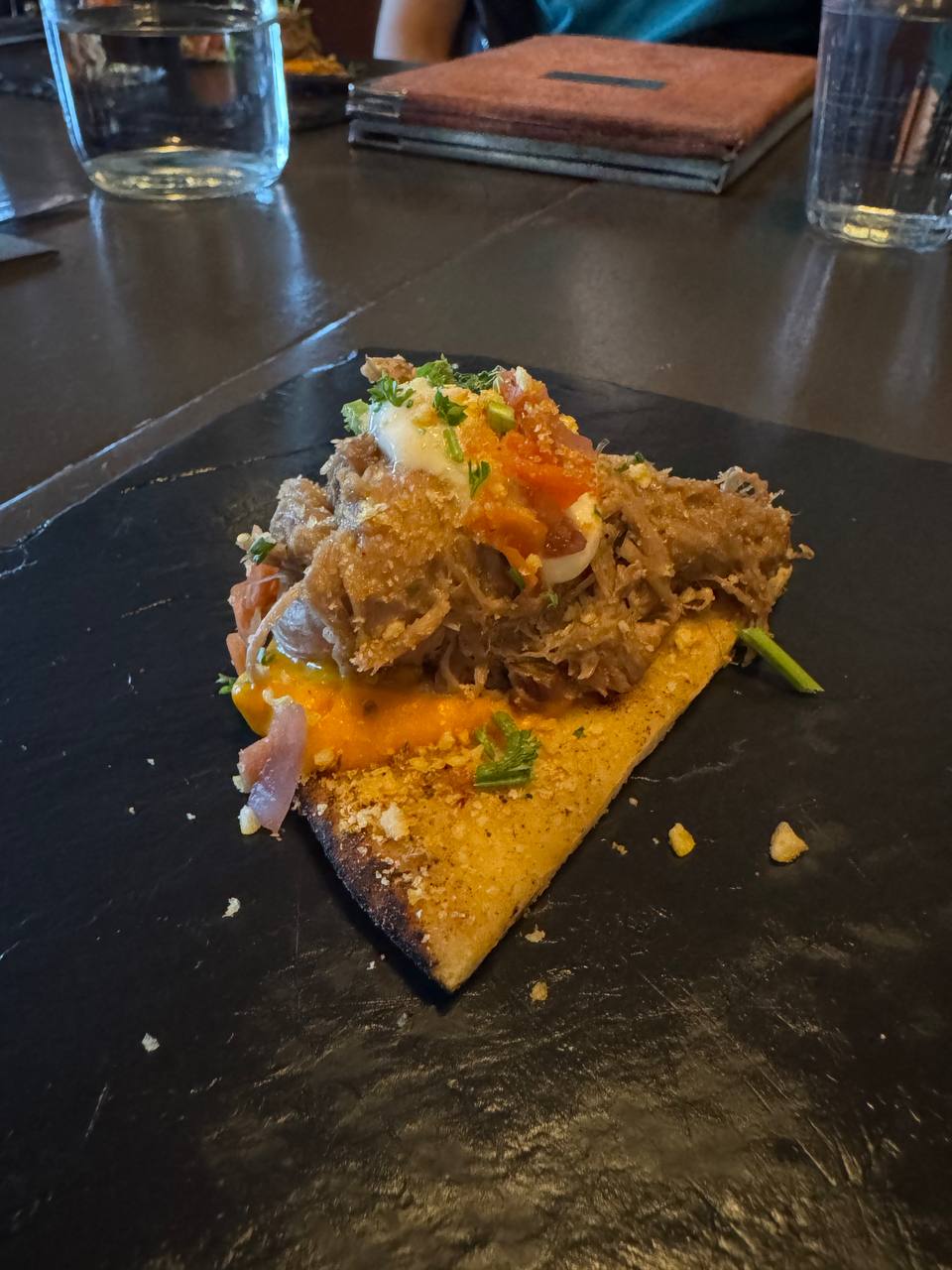 Icelandic food looks unusual to outsiders because it developed in near-total isolation under survival conditions that no other Western food culture shares. A small population on a subarctic island with no arable grain farming, no native fruit, brutal winters, and limited firewood had to eat everything that could be preserved and find preservation methods that worked without salt, without reliable heat, and without refrigeration. Fermentation, wind-drying, smoking with sheep dung, and lactic acid pickling were not culinary choices, they were the only options. The “weird” foods are the direct legacy of that history.
Most food cultures that visitors find unusual have a similar origin: extreme environmental constraint producing extreme preservation methods. Iceland’s version is particularly dramatic because the island’s isolation meant no outside cultural influence until very late in its history, and the specific ingredients available – abundant fish, abundant sheep, no grain – created a food tradition that looks like nothing else in Europe. When you eat hákarl, you are not eating a curiosity invented for shock value. You are eating a solution to the specific problem of how to make a poisonous shark safe to eat in a place where nothing could be wasted.
The crucial context that most tourist articles skip: almost none of these unusual foods are everyday eating for modern Icelanders. They are concentrated in the Þorrablót midwinter festival, held in late January through mid-February, where they are consumed communally as a cultural ritual rather than because anyone particularly wants fermented shark for dinner. Modern Icelanders eat fresh fish, grilled lamb, skyr, and international cuisine across the vast majority of their meals. The unusual foods represent heritage and history. They are important for exactly that reason, but the visitor who expects to find Icelanders routinely eating sheep’s head and fermented shark will find instead a thoroughly modern food culture that occasionally revisits these foods with a mixture of nostalgia, pride, and mild personal distaste.
Iceland’s winter food scene is more distinctive than most visitors expect – our winter food experience in Iceland guide breaks down what changes seasonally and what’s worth going out of your way for.
What Is Hákarl (Fermented Shark) and Should You Actually Try It?
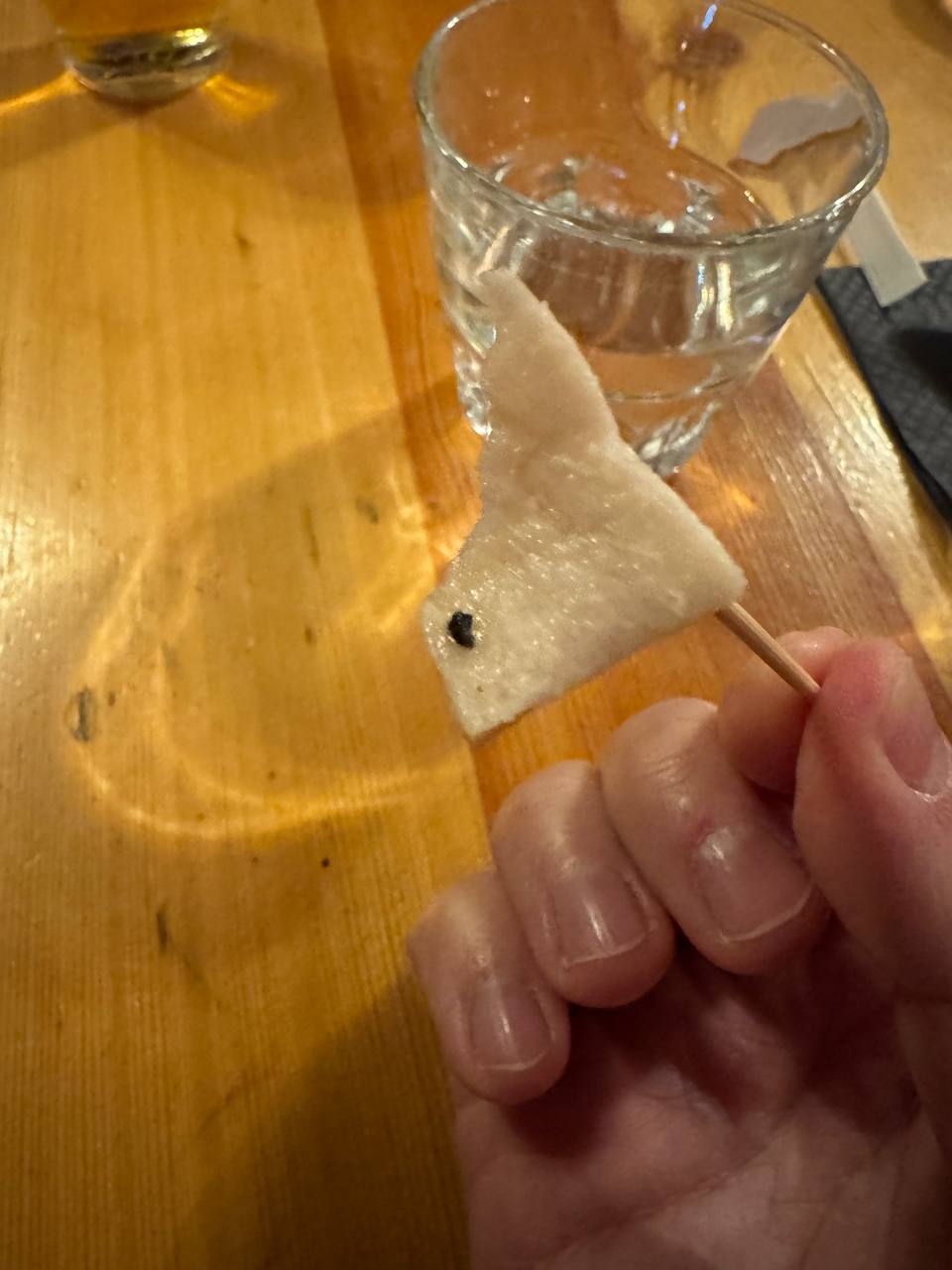 Hákarl is fermented Greenland shark – buried underground in gravel for six to twelve weeks until the toxins in its flesh (Greenland shark meat is poisonous when fresh, due to high urea and trimethylamine oxide) have broken down, then hung to dry in an open-air shed for four to five more months. The result smells powerfully of ammonia and tastes of strong fermented cheese with a urinary aftertaste. Whether to try it depends on your priorities: if you want a genuinely memorable experience that requires courage and delivers a story worth telling, yes. If you want something that tastes good, this is not the dish.
The science of hákarl is the reason it exists. Greenland sharks are among the longest-lived vertebrates on earth – individuals have been recorded at over 400 years old, and their flesh contains extremely high levels of urea and trimethylamine oxide, which makes fresh meat toxic enough to cause illness or death. Traditional Icelandic fermentation removes these toxins over months. The same bacteria used in some blue cheeses participate in this process, which is why multiple tasters have described the flavour as Stilton-adjacent before the ammonia kicks in.
There are two varieties. Glerhákarl (glassy shark), from the belly, is reddish, chewy, and considered by those who like it to be the more flavourful version. Skyrhákarl (skyr shark), from the body, is white and softer with a texture compared to aged cheese. Restaurants typically serve the softer body meat to visitors; the stronger belly meat is what more committed enthusiasts seek.
The Brennivín pairing is not optional decoration. Brennivín is Iceland’s caraway-flavoured potato schnapps, nicknamed Black Death, with a herbal sharpness that cuts through the ammonia residue in a way that nothing else available in Iceland can replicate. The traditional sequence: hold your nose, eat the cube without smelling it first, swallow, then chase with a shot of Brennivín. The caraway actively neutralises the aftertaste. Without Brennivín, hákarl is considerably harder to finish. With it, the experience is genuinely manageable and interesting enough to be glad you tried it.
Anthony Bourdain called it the single most disgusting thing he had ever eaten. Andrew Zimmern, whose career is built on eating challenging foods, said the smell was among the worst things he had ever experienced but the taste was “sweet, nutty and only faintly fishy.” Gordon Ramsay spat it out. James May, sitting next to him, ate it and offered to have more. The range of reactions is genuine and wide. The only honest answer to “should you try it?” is: once, with a guide who can explain what you’re eating and why, with Brennivín, in a setting where the cultural context makes the experience more than just a dare.
What Other Weird Icelandic Foods Should You Know About?
Beyond hákarl, the Þorramatur spread includes five other challenging traditional foods worth knowing before you encounter them: svið (singed boiled sheep’s head, milder in flavour than it looks), hrútspungar (rams’ testicles boiled, pressed, and pickled in whey – sour and chewy), blóðmör (Icelandic blood pudding made from sheep’s blood and suet, similar to black pudding but without spice), lifrarpylsa (sheep liver and suet sausage, dense and rich), and skata (fermented skate ray eaten December 23, considered more pungent than hákarl even by Icelanders).
Svið deserves a direct description because the visual reality is the hardest part. The sheep’s head is singed over an open flame to remove the wool and clean the skin, then split in half lengthwise, the brain removed, and boiled for 60 to 90 minutes. It arrives at the table as a literal half-head – jaw, teeth, cheek, ear, and eye socket all present. The eye is considered by some Icelanders the best part: a rich morsel of fat and connective tissue that pops. If you can engage with what you’re looking at rather than recoiling from it, the cheek meat is genuinely tender and well-flavoured. Svið tastes significantly better than it looks. A gentler entry point is sviðasulta — svið head cheese, where the meat is pressed into a loaf and served sliced cold on bread. Same ingredients, without making eye contact.
Hrútspungar – rams’ testicles – are boiled, pressed together into a mould, pickled in whey lactic acid, and sliced like a loaf. The texture is firm and slightly rubbery; the flavour is sour from the whey pickling. These are the food most likely to produce an involuntary reaction in visitors not from the taste but from the concept. They appear mainly during Þorrablót season (late January through mid-February) in supermarkets and on restaurant þorramatur platters. They are genuinely an acquired taste, Icelanders will readily tell you, and many don’t bother acquiring it.
Blóðmör (blood pudding) and lifrarpylsa (liver sausage) are less challenging than their names suggest for anyone who has encountered black pudding, boudin noir, or haggis in other food cultures. Both are sheep offal preparations, dense and protein-rich, with a flavour more earthy and mineral than offensive. Some people enjoy them sprinkled with sugar, which sounds alarming but is a genuine Icelandic tradition that produces a dish not unlike a very savoury crêpe. The shock value of slátur is considerably lower than its reputation suggests.
Skata deserves its own warning. Fermented skate ray, eaten on December 23 (Þórláksmessa, the feast day of Iceland’s patron saint Þorlákur), is considered by many Icelanders to be even more pungent than hákarl. The smell as it boils fills streets and apartment blocks; neighbours sometimes object. If you are in Iceland on December 23 and smell something that makes hákarl seem mild, you have found skata. It is eaten once a year, specifically on that date, and the tradition is so old and so embedded that it has survived despite near-universal agreement that the smell is genuinely unpleasant.
Not sure which traditional dishes are genuinely worth trying and which ones are mostly eaten for the shock value? Check out our traditional Icelandic food guide before your first meal in Reykjavik.
Where Can You Try Weird Icelandic Foods in Reykjavik?
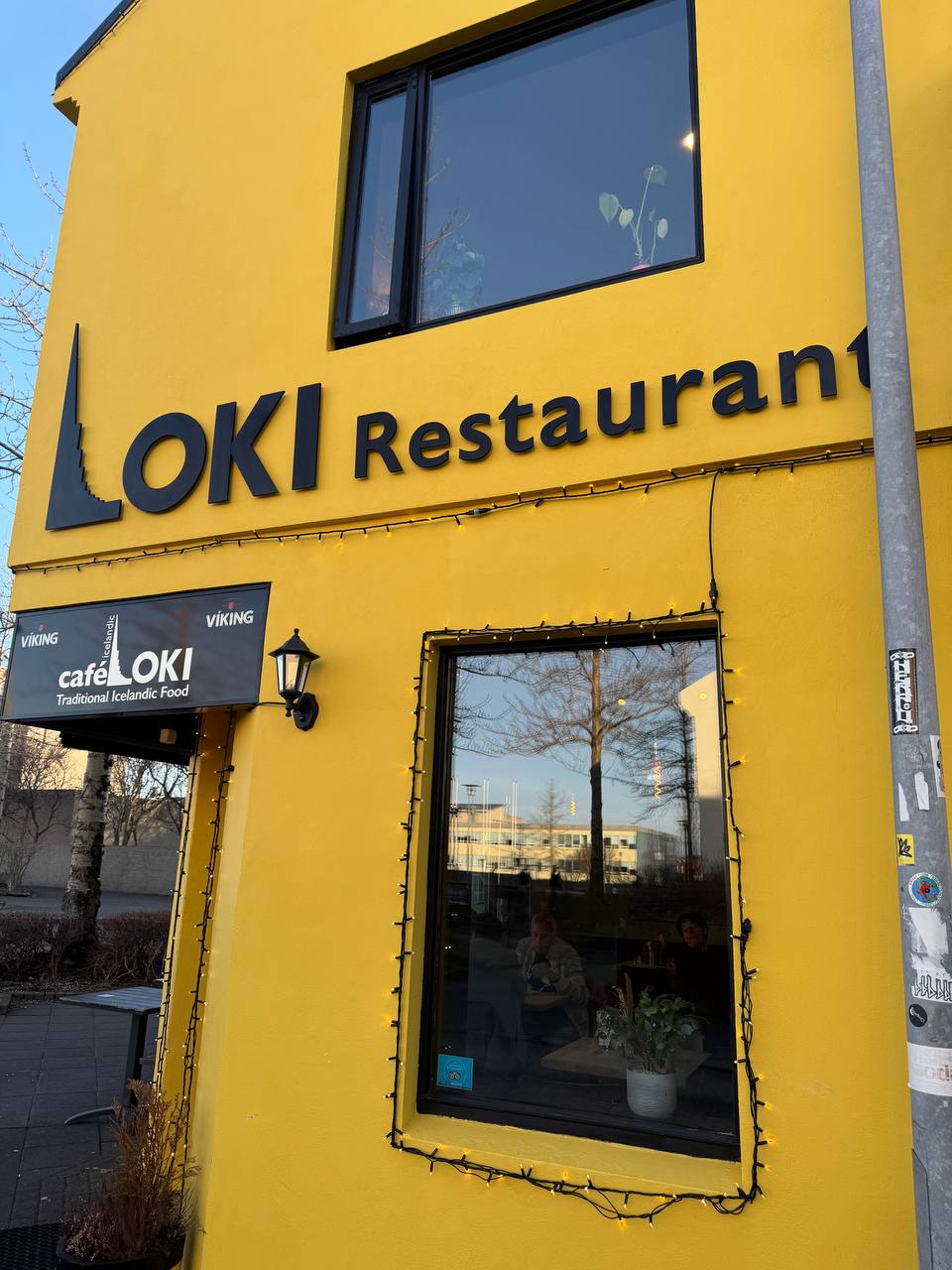 Five places in Reykjavik where challenging traditional foods are reliably available: Íslenski Barinn for the best dedicated þorramatur platter year-round, Café Loki near Hallgrímskirkja for hákarl and a traditional tasting plate, Þrír Frakkar on Baldursgata for hákarl as a side dish in a proper bistro setting, Múlakaffi for svið and honest home-style Icelandic cooking, and the BSI bus terminal cafeteria which serves svið daily as part of its canteen menu – the most unglamorous and therefore most authentic venue on the list.
| Íslenski Barinn | Full þorramatur platter: svið, hákarl, hrútspungar, lifrarpylsa, blóðmör, hangikjöt, harðfiskur, rúgbrauð, flatbrauð, Brennivín | Most comprehensive traditional platter in Reykjavik; lively bar atmosphere; year-round | 4,500-7,500 per platter |
| Café Loki | Icelandic Plate II (hákarl included); individual dishes on traditional menu | Directly opposite Hallgrímskirkja; accessible and tourist-friendly; year-round | 2,500-6,000 |
| Þrír Frakkar | Hákarl side dish; seasonal traditional menu | 30-year-old Icelandic bistro; most credible non-tourist-facing option for hákarl | 1,500-2,500 for hákarl side |
| Múlakaffi | Svið and traditional lunch; þorramatur in season | Staff canteen format; entirely local; honest home-style food; no atmosphere designed for visitors | 1,500-3,500 |
| BSI Bus Terminal cafeteria | Svið daily; traditional Icelandic lunch | Year-round svið in a genuine working cafeteria; no tourist staging; ask at the counter | 1,800-3,000 |
| Kolaportið flea market | Hákarl tasting, harðfiskur, traditional snacks | Saturday-Sunday 11am-5pm; vendors will often explain and let you taste before buying | 800-2,000 per item |
Prices and availability verified April 2025. Þorramatur-specific items are most reliably available January–February.
A note on supermarket hákarl: it is sold year-round in small plastic containers at Bónus, Krónan, and most supermarkets. The price is lower than restaurant versions. The experience is significantly less meaningful without context or the Brennivín accompaniment. If you buy it at a supermarket, also buy a small bottle of Brennivín and a cube of salted butter for contrast. The full ritual in your accommodation is a legitimate alternative to a restaurant tasting, but something is lost without the guide, the setting, and the cultural framing.
We include hákarl on certain versions of the Reykjavik Food Lovers Tour when the context and timing are right. If you want to try these foods with a guide who can make them meaningful rather than just challenging, our Reykjavik Food Tours provide that context.
Wondering which neighbourhood spots and under-the-radar eateries are worth seeking out over the well-marketed tourist favourites? This Reykjavik hidden food gems guide covers the places most first-timers walk straight past.
What Is the Best Order to Try Challenging Icelandic Foods?
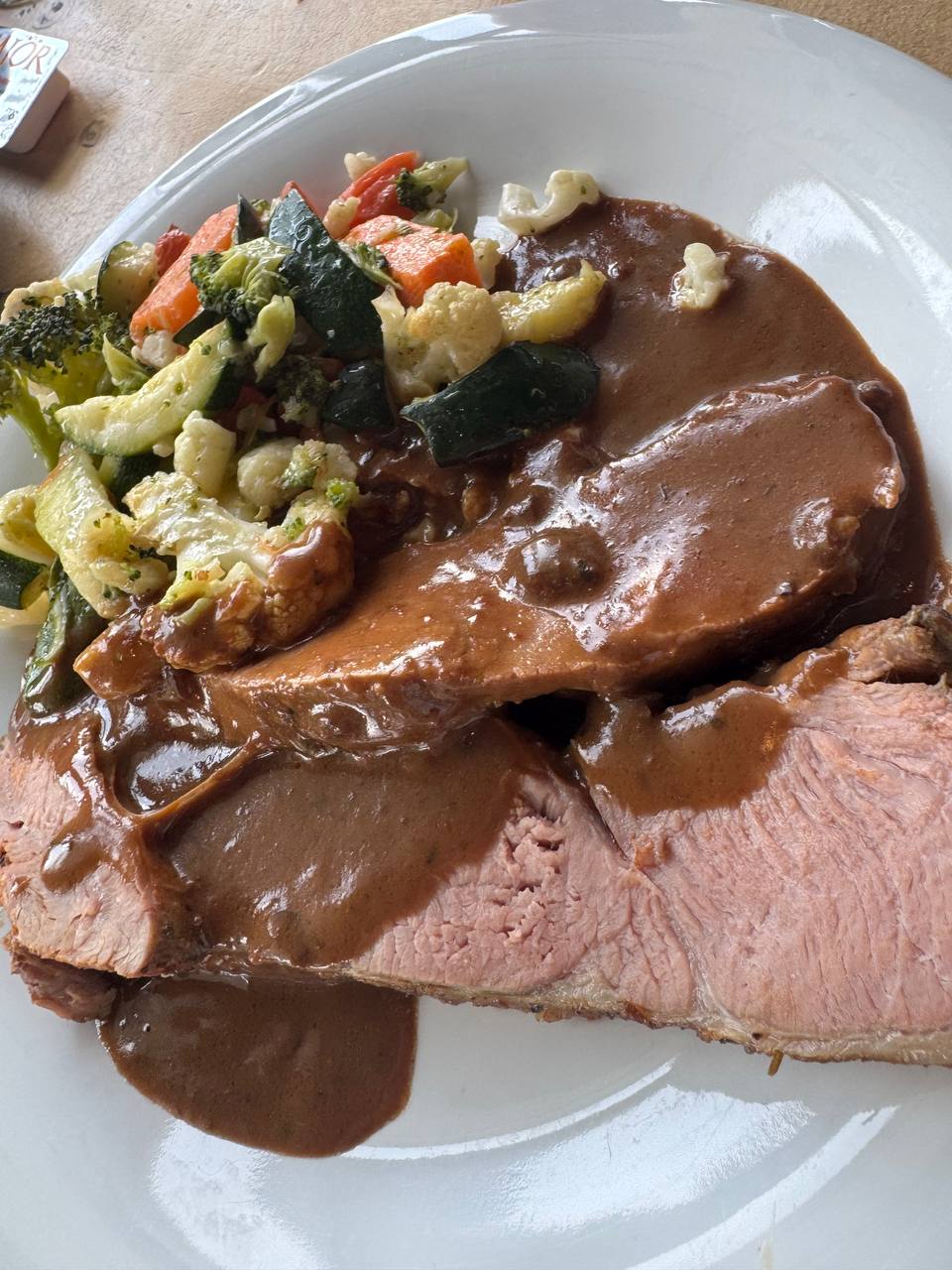 Start with the approachable end and progress toward the challenging. The correct sequence: harðfiskur with butter first (genuinely good, thousand-year-old Viking snack), then sviðasulta or sliced blóðmör (familiar territory for anyone who eats charcuterie), then hangikjöt smoked lamb (beautiful, the food every Icelander actually loves), then hákarl with Brennivín (the main event), then svið if you want to go further. This order builds familiarity with preservation techniques and Icelandic flavour principles before confronting ammonia.
Starting with harðfiskur and butter is the right move because it demonstrates that Icelandic preservation food can be genuinely good. Wind-dried cod with Icelandic salted butter is savoury, protein-dense, and deeply satisfying once you get past the chewiness. It calibrates your sense of what these foods are before the more challenging items appear. It also establishes the principle: these foods were made for survival, they were made with real care, and they reflect a food culture that is more sophisticated than the “weird food” category suggests.
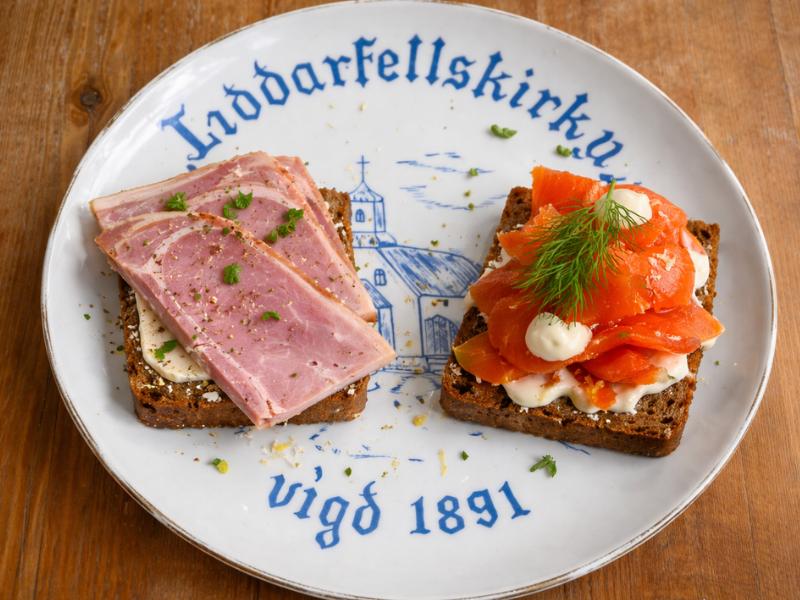
Sviðasulta before svið is the right call for anyone uncomfortable with visual presentation. Head cheese made from svið has the same flavour profile as the halved sheep’s head but arrives as a cold pressed loaf sliced onto bread. The texture is gelatinous and the taste is lamb-forward with a slightly mineral note from the cooking process. It is not confronting. It is, frankly, quite good on flatbrauð with a scraping of butter.
Hákarl should be the challenging centrepiece rather than the first or last thing tried. After several items have established the preservation logic – fermentation, drying, smoking as survival techniques – the ammonia of hákarl makes more sense as an extreme version of the same principle. The Brennivín shot is part of the ritual, not a shortcut to tolerate bad food. Take both together. The caraway cuts the aftertaste more effectively than any other available remedy. If the smell is overwhelming before you eat, pinch your nose, swallow quickly, and release only when you’ve chased with Brennivín. This is not considered cheating in Iceland.
What Do Icelanders Actually Think About Their Weird Foods?
The honest answer: mixed, and often more complicated than tourist-facing content suggests. Most modern Icelanders do not eat hákarl with enthusiasm. It is primarily an older-generation food, now consumed mainly as a cultural obligation at Þorrablót rather than as a genuine preference. Many younger Icelanders find the tourist obsession with these foods slightly baffling – Iceland has extraordinary fresh fish, exceptional lamb, excellent dairy, and a New Nordic fine dining scene that competes internationally. The “weird foods” represent about 0.1% of what Icelanders actually eat. They represent 70% of what tourists ask about.
This tension is real and worth acknowledging. When visitors arrive in Iceland having read extensively about fermented shark and sheep’s head, and then encounter Icelanders who mostly eat fish tacos, pasta, and grilled lamb with rhubarb sauce, there’s a gap between expectation and reality. The traditional foods are genuinely traditional – they connect to a real history of survival that shaped Iceland’s culture profoundly. But framing them as the essence of Icelandic food misses the city of Reykjavik that earned a Michelin star, produces world-class chocolate, and runs food tours rated among the best in Europe.
What Icelanders actually feel about hákarl specifically tends to divide by generation. Older Icelanders, particularly those with rural roots, eat it at Þorrablót with genuine appreciation and sometimes defensive pride when visitors react with horror. Younger Icelanders in Reykjavik are more likely to eat the required ritual cube at the annual feast, find the experience unpleasant, and return to their natural wine and small plates with relief. The Icelandic tour guide community – including the staff at Reykjavik Food Tours – occupies an interesting middle ground: they explain these foods with genuine love for what they represent historically, while being honest that the same history produced far more delicious things that tourists overlook because they’re not sufficiently alarming.
Svið and hrútspungar have a different character than hákarl in Icelandic food memory. Many older Icelanders have nostalgic warmth for svið, it was cheap, filling, and a genuine part of family cooking in ways that hákarl never quite was. Some Icelanders grew up eating sviðasulta on bread as an everyday lunch item. The nose-to-tail philosophy behind all of this – using every part of the animal out of respect and necessity – is something younger Icelanders are returning to through the lens of modern sustainability thinking, finding in it a kind of advanced ethical eating that the current generation can connect with differently than their grandparents did.
How Does a Food Tour Help You Try Unusual Icelandic Foods Safely?
A food tour makes the difference between trying hákarl as a dare and trying it as an education. The guide provides three things no independent restaurant visit does: the specific cultural context (why Greenland shark is toxic when fresh and what the fermentation process actually does), the correct technique (pinch nose, swallow, Brennivín chaser, immediately), and the social buffer of a group where nervous laughter is appropriate and the guide has watched a thousand people go through the same experience. The food is the same in every case. What changes is whether it becomes a story you understand or just a story you survived.
The technique point is more practical than it might seem. Most first-timers approach hákarl wrong – they smell it extensively before eating, which sets up a gag reflex before the food has entered the mouth. The correct approach is specific: nose pinched or held away, cube to mouth, chew briefly, swallow, then breathe and immediately follow with Brennivín. Guides who have watched thousands of people try this food have refined the instruction to the point where significantly fewer people find it impossible than visitors who try it without guidance.
The context the guide provides matters more than it might seem for any food experience but especially for these. Knowing that Greenland sharks live for 400 years and that their flesh is literally poisonous when fresh that the fermentation process was not a choice but the only way to make food available at all in a harsh environment – changes the psychological frame of what you’re eating. It becomes an encounter with a specific kind of human ingenuity rather than a food industry stunt. That shift produces a qualitatively different experience: still difficult, potentially still unpleasant, but now genuinely meaningful.
The food tour also structures the tasting within a broader understanding of what Icelandic food actually is. Seeing hákarl as the outer limit of a food culture that also produces extraordinary langoustine soup, beautiful smoked lamb, and world-class skyr gives visitors the proportion they need to understand Iceland’s food story accurately. The “weird foods” make more sense and feel more significant when they’re positioned within the full context of what Icelanders eat rather than isolated as the sole representative of a food culture that has much more to offer. Book a tour at Reykjavik Food Tours and let us show you both the challenging and the extraordinary.
We’ve put together a full operator comparison in our best Reykjavik food tours guide so you know exactly which experience fits your taste, group size, and budget.
How To Judge The Experience For Yourself
Choose on the actual itinerary, duration and included tastings. A guided outing adds local explanation and an organized route; your own priorities and current quotes determine whether it is worth the cost.
Frequently Asked Questions
Is hákarl (fermented shark) really as bad as people say?
It depends on who you ask. Anthony Bourdain called it the single worst thing he had ever eaten. Andrew Zimmern, whose entire career is eating challenging foods worldwide, described the taste as “sweet, nutty and only faintly fishy” once past the smell. Most visitors find it genuinely difficult but survivable with the correct technique: pinch the nose before eating, swallow quickly without prolonged chewing, immediately chase with a shot of Brennivín caraway schnapps. The smell is the hardest part. The taste is strong but not impossible. The experience is definitively memorable regardless of whether you enjoy it.
Do Icelanders eat fermented shark and sheep’s head every day?
No. Modern Icelanders eat fresh fish, lamb, skyr, and international cuisine across the vast majority of their meals – similar to any other Nordic country. The unusual traditional foods – hákarl, svið, hrútspungar – are concentrated in the Þorrablót midwinter festival in late January through mid-February, where they are eaten as a cultural ritual. Outside that season, hákarl is available year-round in supermarkets for those who want it, but it is heritage food rather than everyday eating. Most younger Icelanders find the tourist obsession with these foods mildly puzzling given how much better the country’s everyday cooking is.
What is Þorramatur and when is it served?
Þorramatur is the collective name for the traditional foods served at Þorrablót, Iceland’s midwinter feast held in late January through mid-February. The spread includes hákarl (fermented shark), svið (singed boiled sheep’s head), hrútspungar (pickled rams’ testicles), blóðmör (blood pudding), lifrarpylsa (liver sausage), hangikjöt (smoked lamb), harðfiskur (dried fish), rúgbrauð (rye bread), and flatbrauð (flatbread). Brennivín schnapps is the accompanying drink. Most of these foods are specifically available in shops and restaurants during the Þorrablót season and less accessible the rest of the year.
Where is the best place to try hákarl in Reykjavik?
Íslenski Barinn offers the most comprehensive þorramatur platter in Reykjavik with all the traditional items together, in a bar setting where the social atmosphere supports the experience. Café Loki near Hallgrímskirkja serves it as part of their Icelandic tasting plate in a more accessible tourist-friendly setting. Þrír Frakkar, the 30-year-old Icelandic bistro, serves it as a side dish in the most credible non-tourist-facing context. All three are preferable to buying it cold in a supermarket without the Brennivín pairing or cultural context. All prices verified April 2025.
What is svið and should I try it?
Svið is singed and boiled sheep’s head, split in half and served with the eye intact. The visual presentation is the main challenge – the taste is actually mild lamb, tender at the cheek, with a slightly gelatinous texture. If you can engage with what you’re seeing rather than recoiling from it, the flavour is better than expected. A gentler version is sviðasulta – head cheese made from svið, pressed into a loaf and served cold on bread. Same ingredients, no direct eye contact. The BSI bus terminal cafeteria in Reykjavik serves svið daily year-round as a standard lunch item.
Why is Brennivín paired with hákarl?
Brennivín is Iceland’s caraway-flavoured potato schnapps (also called “Black Death”). The caraway flavour actively cuts through the ammonia aftertaste of hákarl in a way that other spirits don’t. The pairing is traditional rather than accidental: the two products evolved together as part of the Þorrablót ritual, and the schnapps makes the shark significantly more manageable. The correct ritual is to eat the hákarl cube first, then immediately chase with a cold shot of Brennivín. Skipping the Brennivín makes hákarl considerably harder. It is, in the most practical sense, necessary equipment.
Icelandic tour guide since 2014 · Founder, Reykjavik Food Tours
Sigurd has guided over 8,700 travelers through Reykjavik’s food scene since founding the agency.
Make Room For One Food Experience
Traditional Icelandic Food Walk
Lamb soup, traditional tastings and fermented shark with a local guide. Have a travel date in mind? Check the departure before arranging the rest of your food day.
Meet outside Hlöllabátar at Ingólfstorg; finishes at the same square. Hotel transfers and tips excluded. Dietary requests need operator confirmation.
Choose a date to check the published Viator schedule. Final availability and price are confirmed on Viator.
Check Dates On ViatorTraditional Tastings Or A Gentler Introduction?
Choose an experience and we will check duration and requirements against the verified product details. Allow travel time separately.
Compare Your Own Costs
Enter totals for the same group in one currency. Use your actual DIY meals, not full restaurant portions priced against small tastings.
Add both amounts to compare. Transfers and extra meals are separate.