Icelandic Street Food to Try in Reykjavik
Reykjavik street food is simple but iconic - hot dogs, dried fish, pastries, and cheap eats. Discover what to try, prices, and where to find it.
Reykjavik’s street food scene runs on a small number of things done extremely well. The pylsur hot dog – lamb-pork-beef blend, steamed bun, five-topping combination – is the most iconic and cheapest at 820 ISK from Bæjarins Beztu. Harðfiskur, wind-dried cod or haddock eaten with Icelandic butter, predates the hot dog by a thousand years and costs under 800 ISK per bag at any gas station; it is Iceland’s original portable food. Kleinur are the Icelandic twisted cardamom doughnut, available at bakeries from around 400 ISK. Beyond the classics, the Icelandic bread bowl soup at Icelandic Street Food restaurant (1,800-2,290 ISK, free refills), Hlöllabátar submarine sandwiches (1,500-2,200 ISK), and Reykjavik Chips Belgian-style fries (750-1,350 ISK) represent the local street food circuit. None of these require a restaurant booking. All are available on the walk between the harbour and Hallgrímskirkja.
Use the guide to plan independent food stops, or add a guided experience. Local food, city history, hot dogs, fish and Icelandic ice cream. Explore The Guided Option
Affiliate links may earn us a commission at no extra cost to you. Restaurant prices in the original guide are dated estimates; confirm current menus.Quick Reference: Reykjavik Street Food at a Glance
| Pylsur (hot dog) | 820 | Bæjarins Beztu Pylsur, any gas station, N1, Vikinga Pylsur | “Eina með öllu” – one with everything |
| Harðfiskur with butter | 600-900 per bag | Any Bónus, Krónan, gas station, Kolaportið flea market | Buy bag + small butter pat; tear and dip |
| Kleinur (Icelandic doughnut) | 300-500 each | Brauð and Co, Sandholt, any Icelandic bakery | Order with black coffee for the full Icelandic experience |
| Bread bowl soup | 1,800-2,290 | Icelandic Street Food (Lækjargata), Svarta Kaffið (Laugavegur) | Lamb soup or fish stew; free refills at Icelandic Street Food |
| Hlöllabátar sub sandwich | 1,500-2,200 | Multiple city-centre locations | Lamb or shrimp sub with Icelandic sauces |
| Reykjavik Chips fries | 750-1,350 | Vitastígur 10, central Reykjavik | Large portion with bearnaise or garlic sauce |
| Noodle Station soup | 960-2,290 | Laugavegur and Skólavörðustígur locations | Vegetable under 1,000 ISK; beef or chicken ~1,890 ISK |
All prices verified April/May 2026.
What Counts as Street Food in Reykjavik?
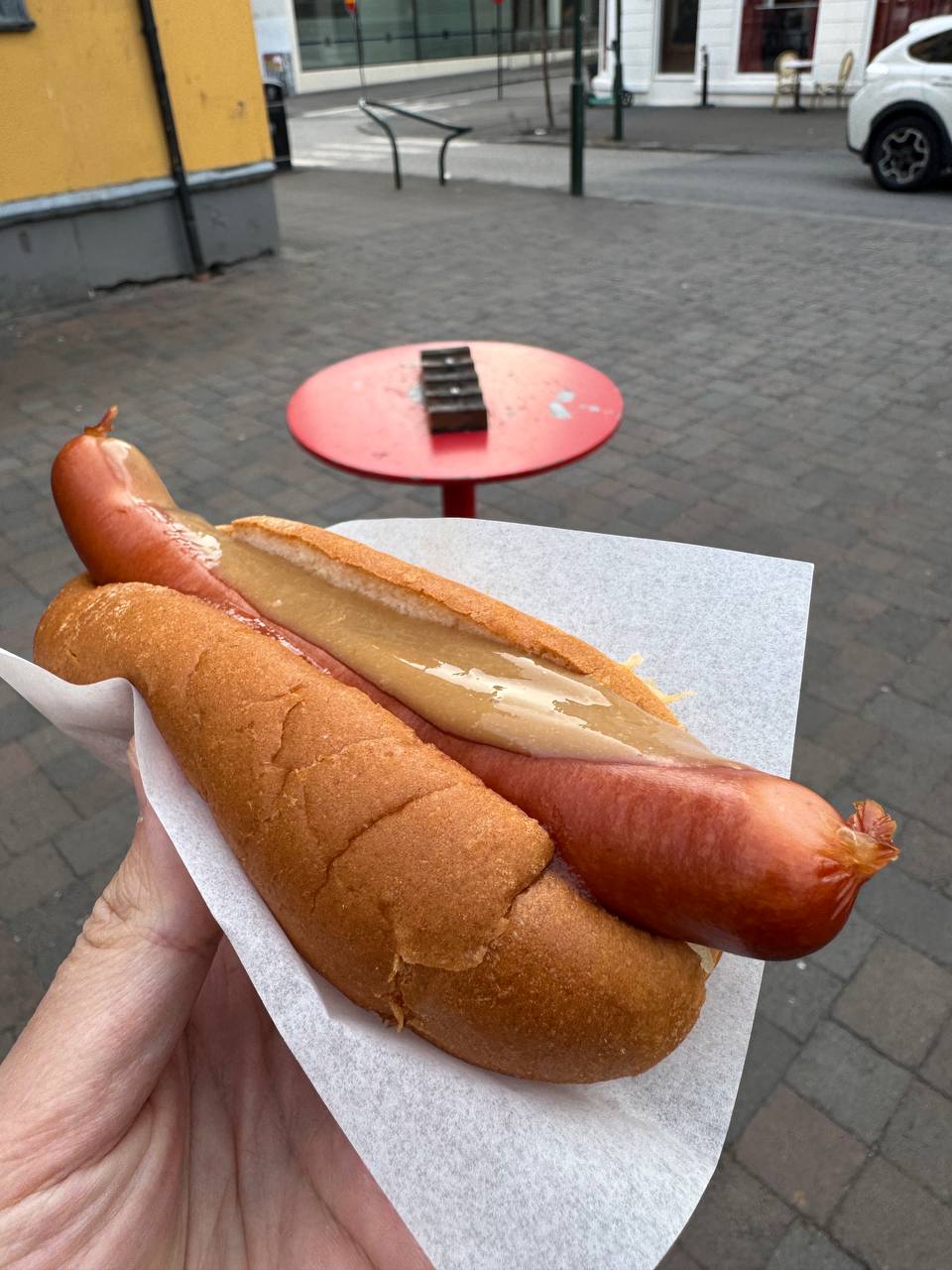 Street food in Reykjavik covers a broader category than in warmer cities – eating while walking in cold and wind is not always practical, so the Icelandic definition extends to fast, informal, wallet-friendly eating that doesn’t require a booking, a sit-down experience, or spending more than 2,500 ISK. This includes the pylsur hot dog stand, dried fish from any gas station, kleinur from bakeries, the bread bowl soup restaurants, the submarine sandwich chains, and the Belgian-style fries shop. All of these are available within 10 minutes’ walk of each other in central Reykjavik.
Iceland doesn’t have a street food culture in the Southeast Asian sense, where vendors line the roads and eating while walking is standard. The weather prevents that. Instead Reykjavik’s street food occupies a specific middle ground: fast food stands and informal counter-service spots where the food is genuinely local, the price is affordable, and the ordering process requires no planning. These are the places that make up the quick-eat circuit of the city – the places you stop at between activities rather than planning a meal around.
What’s interesting about Reykjavik’s street food tier is that it’s more culturally grounded than fast food in most comparable cities. The pylsur is genuinely the national snack, eaten by everyone across every age and income level. Harðfiskur is a thousand-year-old Viking portable food that Icelanders still carry in bags and eat while hiking or driving. The kleinur is a domestic pastry tradition with no international equivalent. The bread bowl soup is traditional Icelandic cooking at takeaway prices with free refills. This is a street food culture built on real food history rather than adapted chains.
What Is the Icelandic Hot Dog and Why Is It Worth the Hype?
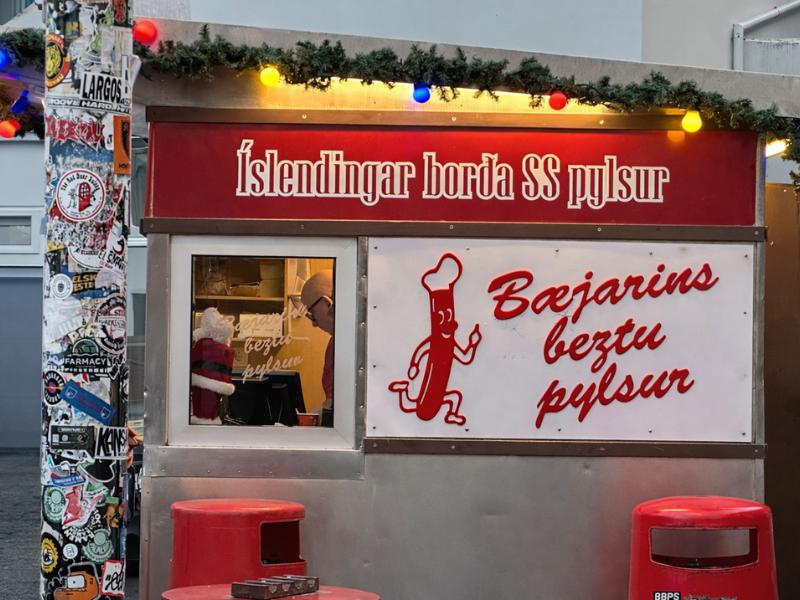
The Icelandic hot dog is worth the hype because it’s fundamentally different from the hot dog you know. The sausage is made primarily from lamb – not the beef or pork blend of most hot dogs – giving it a distinctive sweetness and a cleaner, more herbal flavour from the free-range Icelandic sheep. The steamed bun is softer than grilled or toasted versions. The five-topping combination is calibrated: Icelandic sweet mustard (sweeter and milder than European mustards), apple-based ketchup, remoulade, raw onions, and crispy fried onions. The phrase to use when ordering is “eina með öllu” – one with everything. At 820 ISK, it’s the cheapest good food in Iceland.
Bæjarins Beztu Pylsur (which translates to “the town’s best hot dogs”) has operated from the same spot near the harbour since 1937. The stand hasn’t moved as the city built up and modernised around it over 87 years. It is open from 9am to past midnight most days – until 2am Thursday and as late as 6am on Friday and Saturday nights. The queue moves fast. On a peak summer afternoon it might seem long; it rarely takes more than five minutes from the back of the line to eating. The harbour stand on Tryggvagata is the original. There are now eight more locations around greater Reykjavik and two at Keflavik Airport.
The five toppings matter more than most hot dog discussions acknowledge. The Icelandic sweet mustard is not German-style or English-style; it’s lighter, sweeter, and specifically calibrated to complement lamb. The remoulade – a mayonnaise-based relish with capers, herbs, and a slightly pickled note – adds complexity that ketchup alone can’t. The two types of onion serve different functions: raw onion for sharpness, fried onion for crunch and a caramelised sweetness. The combination is genuinely designed, not assembled. Ordering with all five toppings produces a different product from ordering with just ketchup and mustard, and the phrase “eina með öllu” is worth knowing before you arrive at the counter.
Gas station pylsur deserve a defence. The same SS Pylsur brand sausage is sold at N1 and Orkan stations across Iceland, often for marginally less than Bæjarins Beztu, and without the queue. The sausage quality is the same; what you lose is the atmosphere and the specific experience of that particular stand. On the Ring Road outside Reykjavik, a gas station pylsur is not a compromise, it’s the correct version of the experience for that context.
First time trying to eat affordably in Iceland and not sure it’s even possible? Here’s our Reykjavik food tours cheap eats guide so you stop assuming everything is out of reach.
What Other Icelandic Street Foods Should You Try?
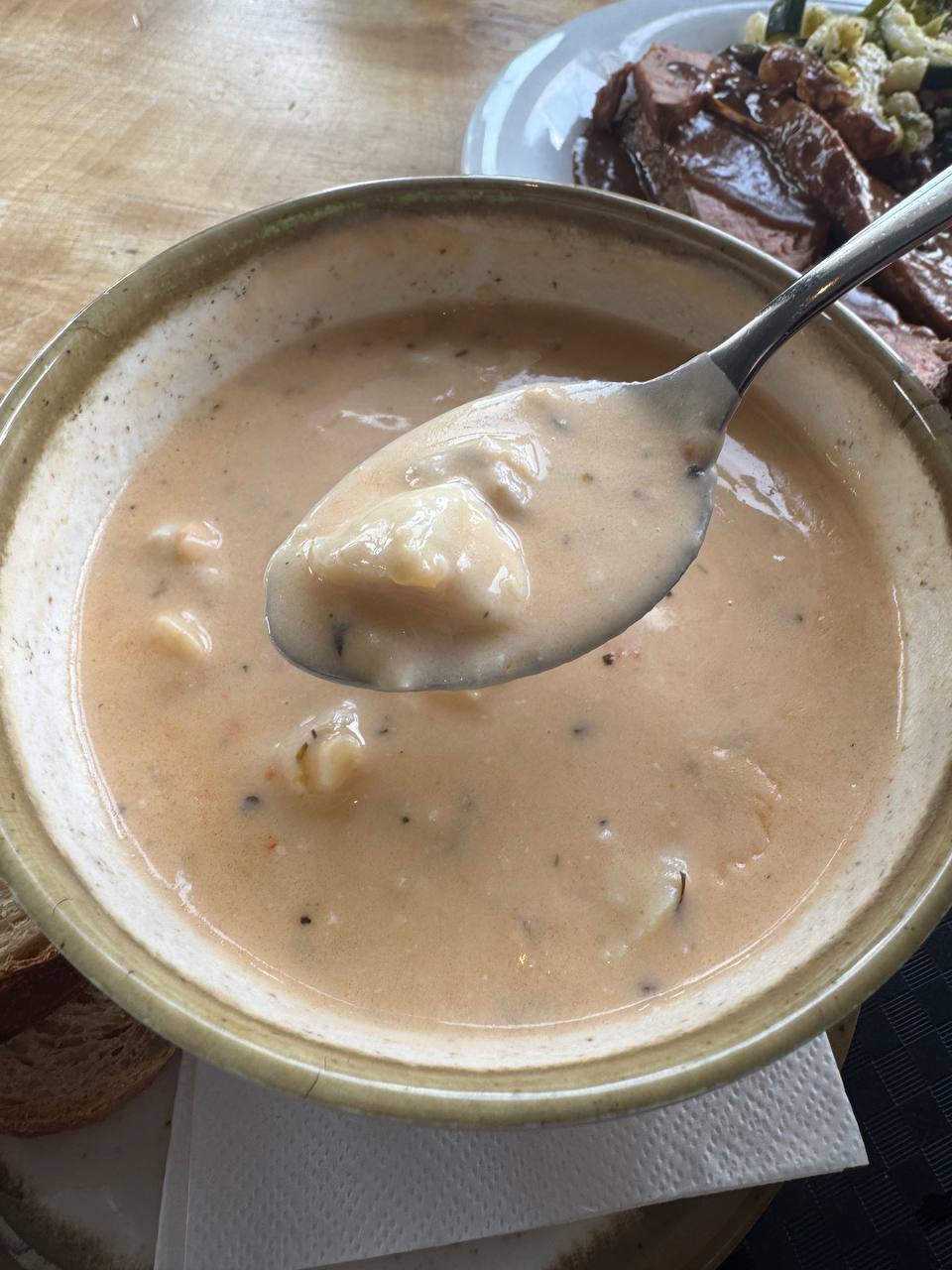 Beyond the pylsur, the four Icelandic street foods worth trying are harðfiskur with butter (wind-dried cod or haddock, Iceland’s Viking-era portable snack, available at every gas station and supermarket), kleinur (the traditional twisted cardamom doughnut from any bakery), bread bowl soup at Icelandic Street Food (lamb or fish stew in a homemade bread bowl with free refills), and skyr eaten from a pot while walking – the thick Icelandic dairy staple that Vikings brought here in 874 and that still defines Icelandic daily eating.
Harðfiskur is Iceland’s original street food, predating the hot dog by a thousand years. Cod, haddock, or wolffish cleaned and hung to dry in the salty North Atlantic air until papery and hard. The traditional method took four to six weeks; modern production compresses this to 36-48 hours. Before grain imports were affordable, Icelanders ate harðfiskur as a bread substitute – with salted butter spread on each piece, softening the dried fish and creating a combination that is surprisingly rich and deeply savoury. The first Vikings to reach Iceland carried this with them. Icelanders eat it today as a snack at cinemas and while watching television, in preference to crisps or popcorn. A 100g bag costs 600-900 ISK at Bónus; buy a small pat of Icelandic butter alongside it. Tear off a piece, spread with butter, let it soften slightly in your mouth before chewing. This is one of the most authentic and least tourist-facing food experiences available in Iceland for under 1,000 ISK.
Kleinur are the Icelandic twisted doughnut – a diamond of spiced dough with a slit cut through the middle, one end pulled through to create the characteristic twist, then deep-fried until golden. The flavour is cardamom-forward with a light sweetness. The texture varies slightly by bakery: some are denser, some lighter. The comparison to other doughnuts is imperfect because the spicing and the shape create a different product. Every bakery in Iceland makes them. At Brauð and Co and Sandholt they cost 300-500 ISK each and are made daily. Icelanders eat them with black coffee – the slightly bitter coffee and the sweet spiced doughnut create a pairing that functions as Iceland’s version of the afternoon break. A single kleinur from Brauð and Co at 8am, eaten while walking toward the harbour, is one of the simplest and most locally-grounded food moments available in Reykjavik.
Skyr deserves mention as a mobile food even if nobody thinks of it as street food. Sold in small individual pots at every supermarket and gas station for 500-700 ISK, Icelandic skyr (thick, protein-dense, mildly sour dairy product made from cultured skim milk) is how Icelanders snack throughout the day. Plain skyr from Bónus, eaten directly from the pot, is not glamorous. It is however what Icelanders have been eating in essentially the same form since the settlement in 874, making it one of the most historically continuous food experiences available on the island.
We’ve put together a full culinary breakdown in our what to eat in Reykjavik food tours guide so you know exactly what to order, where to find it, and which guided experiences are worth booking.
Where Are the Best Street Food Spots in Reykjavik?
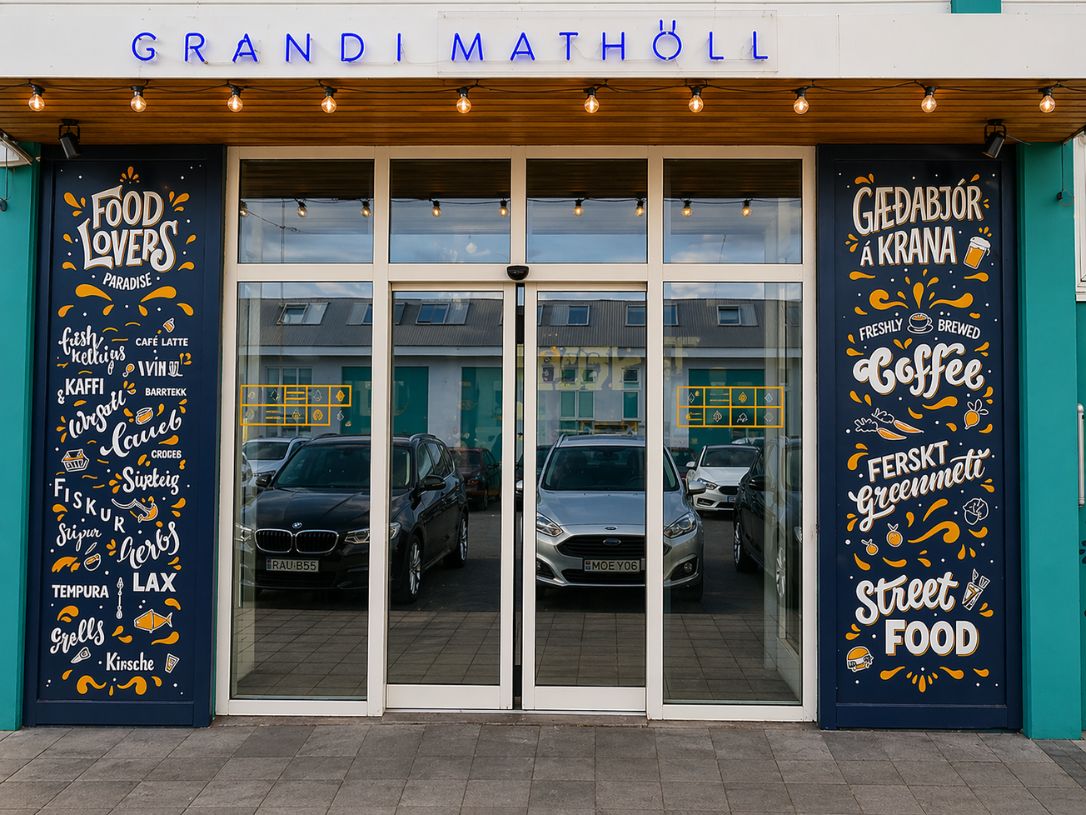 The street food circuit runs between the harbour and Hallgrímskirkja – a 15-minute walk – and contains every major street food option in central Reykjavik. The cluster at the harbour: Bæjarins Beztu hot dog stand on Tryggvagata, Kolaportið flea market on weekends for harðfiskur and traditional snacks. Moving inland: Icelandic Street Food on Lækjargata for bread bowl soup. Reykjavik Chips on Vitastígur for Belgian fries. Multiple Hlöllabátar and Noodle Station locations along and off Laugavegur. Brauð and Co on Frakkastígur for kleinur. The whole circuit is walkable in an afternoon.
| Bæjarins Beztu Pylsur | Tryggvagata 1 (harbour) | Pylsur eina með öllu | Sun-Wed 9am-1am; Thu 9am-2am; Fri–Sat 9am-6am |
| Icelandic Street Food | Lækjargata 8 | Lamb soup or fish stew bread bowl (free refills) | Daily from 11am |
| Brauð and Co | Frakkastígur 16 (+ Laugavegur 180) | Kleinur, cinnamon roll, sourdough | Daily from 6:30am |
| Reykjavik Chips | Vitastígur 10 | Belgian fries with bearnaise or garlic sauce | Mon-Thu 11:30am-10pm; Fri-Sun 11:30am-11pm |
| Hlöllabátar | Multiple central locations | Lamb or shrimp sub with Icelandic sauces | Mon-Fri 8:30am-10:30pm; weekends 10am-1:30am |
| Noodle Station | Laugavegur and Skólavörðustígur locations | Vegetable noodle soup (under 1,000 ISK); beef or chicken ~1,890 ISK | Mon-Fri 11am-10pm; weekends 12pm-10pm |
| Kolaportið flea market | Tryggvagata 19 (harbour) | Harðfiskur, kleinur, traditional Icelandic candy, flatbrauð | Saturday and Sunday 11am-5pm only |
Addresses and hours verified April/May 2025. Always check for seasonal adjustments.
The harbour area has the highest density of street food options in a small radius. Bæjarins Beztu by the water, Kolaportið flea market 200 metres away on weekends, Grandi Mathöll food hall a 10-minute walk west for a more varied sit-down street food experience. Starting at the harbour in the morning and walking slowly toward Hallgrímskirkja produces encounters with most of the city’s best quick-eating options in under two hours and under 3,000 ISK total if you’re disciplined.
Want to go beyond the same five places that show up on every Iceland food list? Here’s our Reykjavik hidden food gems guide so your meals actually stand out.
What Is the Best Street Food Itinerary for Reykjavik?
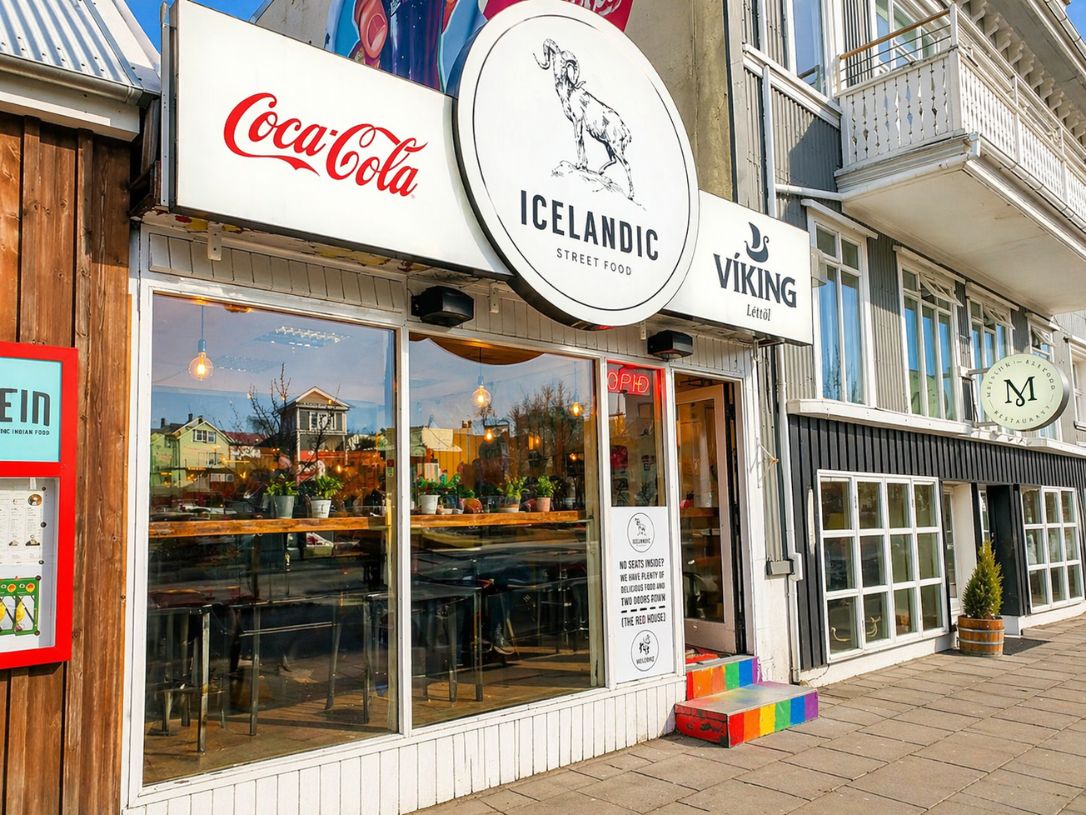 The ideal Reykjavik street food day follows the waterfront-to-church axis, eating lightly at each stop to cover as many of the classics as possible in a single afternoon. Start at Brauð and Co by 8am for kleinur and coffee. Walk to the harbour for a pylsur from Bæjarins Beztu (late morning avoids the peak queue). Stop at Kolaportið on a weekend for harðfiskur and traditional snacks. Walk toward Laugavegur for a Noodle Station soup at midday if you’re still hungry. Reykjavik Chips on Vitastígur for fries with a sauce if there’s still an appetite. End at Icelandic Street Food for a bread bowl soup as the main early evening eat. Total cost: under 6,000 ISK for a complete tour of the city’s street food history.
Starting at Brauð and Co on Frakkastígur at 8am frames everything that follows. The kleinur – freshly twisted and fried, carried out in a paper bag with a black coffee – is the most specifically Icelandic item available at that hour for the least money. The walk from Frakkastígur down toward the harbour takes you through the old city before tourist foot traffic arrives, which is the right time to see it.
The pylsur at Bæjarins Beztu is best at 10am or 10:30am on a weekday – past the breakfast window, before the lunch rush, when the stand is operating steadily but not at capacity. Order “eina með öllu.” Stand by the water to eat it. Do not try to walk and eat a pylsur in the wind. Find a bench or a wall.
Kolaportið on a Saturday morning (11am opening, arrive by 11:30am) follows naturally from the harbour stand. The food section of the flea market has the widest selection of traditional Icelandic snack products in one place: harðfiskur in multiple varieties, kleinur from the fresh batch, flatbrauð, Icelandic licorice in every form. Buy harðfiskur and eat it while walking west. Bring cash.
Icelandic Street Food for the main event at 5 or 6pm. The lamb soup bread bowl with the free refill policy is the best single-item value in the city at 1,800-2,290 ISK. The bread bowl is edible and should be eaten. The free waffles with jam at the end are not mentioned in most articles and are worth knowing about. The restaurant on Lækjargata is small; arrive at opening time on a busy evening to guarantee a table.
Want a practical food plan that actually fits around your other Reykjavik activities? Here’s our Reykjavik food tours itinerary guide so nothing clashes and nothing gets missed.
How Much Does Street Food Cost in Reykjavik?
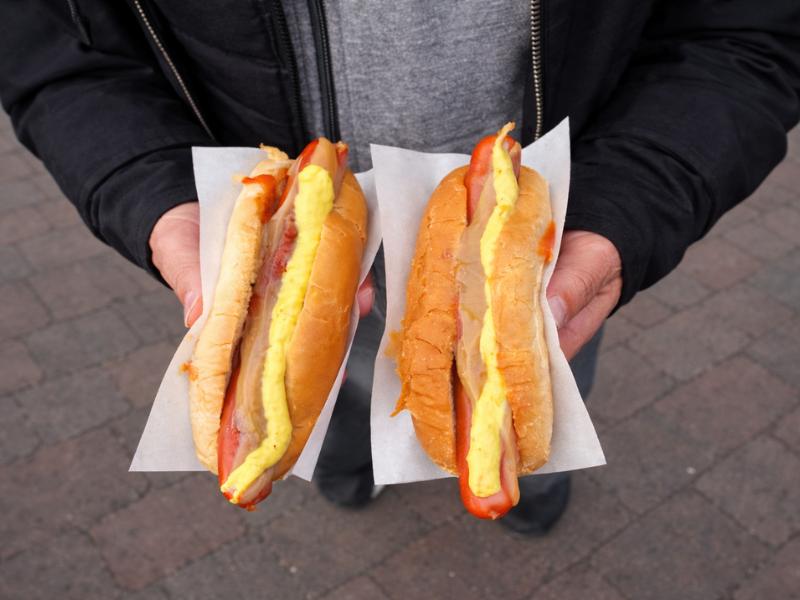
Street food in Reykjavik is the most affordable eating tier in an expensive city. A complete street food day – kleinur, pylsur, harðfiskur bag, Noodle Station soup, and a bread bowl dinner – costs under 6,000 ISK total (~$43 USD). Individual items run from 300 ISK for a bakery pastry to 2,290 ISK for the most expensive soup with free refills. The hot dog at 820 ISK is the price floor for a cooked item you eat standing up. Everything above that is good value by Reykjavik standards, and meaningfully less than any sit-down restaurant.
The pricing context matters here. A main course at a mid-range restaurant in Reykjavik runs 4,000-7,000 ISK. A fine dining tasting menu runs 18,000-25,000 ISK. Against this backdrop, the 820 ISK hot dog is not just cheap, it’s categorically different in the economy of the city. Two pylsur and a bottle of tap water from your reusable flask is lunch for under 1,700 ISK. A bag of harðfiskur and a piece of skyr from Bónus is a morning snack for under 1,200 ISK. The bread bowl soup with free refills at 2,290 ISK competes with almost nothing else in the city at that quality level for that price.
Where costs can multiply unexpectedly: buying bottled water alongside street food (unnecessary – tap water is glacial spring water and free), buying harðfiskur at a tourist-facing gift shop rather than Bónus (three to four times the supermarket price for the same product), or treating the Icelandic Street Food restaurant as a single-serving experience when the free refill policy makes it work best as a sit-down meal. Street food in Reykjavik is genuinely affordable, but only for visitors who know where the value lives and where it doesn’t.
One more cost note: Hlöllabátar submarine sandwiches (1,500-2,200 ISK) are large enough that two lighter eaters can share one. Noodle Station vegetable soup under 1,000 ISK is the cheapest sit-down hot meal in central Reykjavik. Reykjavik Chips large portion with sauce at 1,050-1,350 ISK is a meal, not a side. All prices verified April/May 2025.
Wondering which meals are worth splurging on and which ones have cheaper alternatives that don’t feel like a compromise? This is food expensive in Reykjavik tours guide covers the honest breakdown most Iceland travel blogs skip.
What Street Foods Do Locals Actually Eat on the Go?
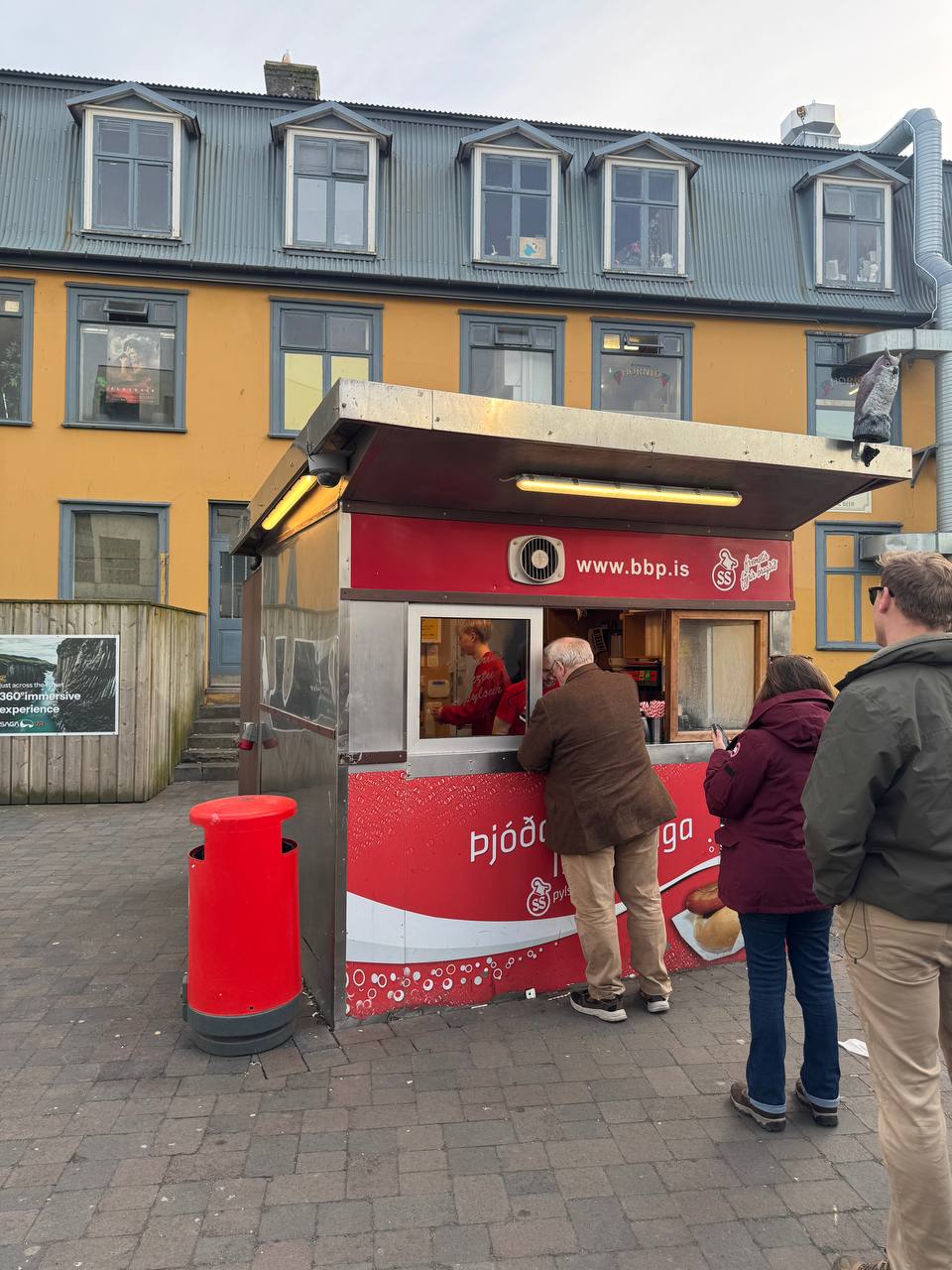 Three things Icelanders carry and eat on the move: harðfiskur from a bag, skyr from a pot, and a pylsur from whichever gas station they stopped at on the road. The kleinur exists somewhere between street food and café food, it’s a bakery item that is also carried away and eaten walking. The bread bowl soup is too liquid to eat walking and is therefore not technically on-the-go eating, but Icelanders eat it at the Icelandic Street Food counter regularly as an informal lunch. The pattern is consistent: Icelandic on-the-go eating is high-protein, portable, and either very old (harðfiskur, skyr) or very post-war (pylsur).
The harðfiskur habit deserves emphasis because it’s among the most genuine expressions of Icelandic food culture available to a visitor for minimal cost. Icelanders carry bags of dried fish on hiking days, road trips, office commutes. The history behind it – bread was a luxury imported product for centuries, so fish became the portable everyday food – makes a simple snack into something that says a great deal about how Iceland fed itself in an isolated Arctic environment. Eating harðfiskur with butter while walking the waterfront in Reykjavik is, in a small way, the most historically continuous food experience in the city.
The pylsur at a gas station on a road trip is the other distinctly local on-the-move eating. Icelanders stop at N1 stations across the Ring Road not primarily for fuel but for the combination of coffee and a pylsur that constitutes a driving break. This tradition is so embedded that some remote gas station pylsur stands have their own local reputations – Pylsuvagninn in Selfoss has served hot dogs for decades and has a following among locals driving south from Reykjavik. The idea of driving an hour specifically for a hot dog is not unusual in Iceland. The ísbíltúr (ice cream road trip) has a parallel in pylsur culture, though it goes by a less formal name.
If you want to understand Reykjavik’s food culture through its street food, the one thing to do before leaving is try harðfiskur with butter and a pylsur eina með öllu on the same afternoon. Two items, under 1,800 ISK total, representing different eras of Icelandic food history. Nothing more elaborate is required. Our food tours at Reykjavik Food Tours cover both in context – along with 8-11 other tastings that fill in the story around them.
Icelandic cuisine has more depth than most visitors ever discover – our traditional Icelandic food guide breaks down the dishes, ingredients, and food traditions that actually define the culture.
How To Judge The Experience For Yourself
Choose on the actual itinerary, duration and included tastings. A guided outing adds local explanation and an organized route; your own priorities and current quotes determine whether it is worth the cost.
Frequently Asked Questions
What is “eina með öllu” and why does it matter?
“Eina með öllu” means “one with everything” in Icelandic and is the phrase to use when ordering at a hot dog stand. It requests all five standard toppings: Icelandic sweet mustard, apple-based ketchup, remoulade, raw onions, and crispy fried onions. Ordering with all five produces a distinctly better combination than ordering with two or three. The toppings are calibrated to work together. Knowing the phrase means you don’t have to negotiate individual toppings at a busy stand.
What is harðfiskur and how do you eat it?
Harðfiskur is wind-dried cod, haddock, or wolffish – Iceland’s Viking-era portable food that has been eaten on this island for over a thousand years. Buy a bag at any Bónus, Krónan, or gas station for 600-900 ISK. Tear off a piece, spread with Icelandic salted butter, and let it soften briefly in your mouth before chewing. The butter is not optional; it softens the dried fish and complements the flavour in a way that eating it plain doesn’t replicate. It is high in protein, genuinely filling, and among the most historically authentic food experiences available in Iceland for under 1,000 ISK.
What is a kleinur?
Kleinur are the traditional Icelandic twisted doughnut – a diamond of dough flavoured with cardamom, slit in the middle with one end pulled through to create the twist, then deep-fried. The flavour is lighter and more spiced than a standard doughnut. Every bakery in Iceland makes them. At Brauð and Co and Sandholt they run 300-500 ISK each. The Icelandic way to eat them is with black coffee in the afternoon. A single kleinur and a coffee at Brauð and Co is one of the cheapest and most genuinely Icelandic food moments available in Reykjavik.
Where is the best hot dog in Reykjavik?
Bæjarins Beztu Pylsur on Tryggvagata 1 by the harbour is the original and most famous, operating since 1937. The sausage quality at other Bæjarins Beztu locations and at N1 gas stations across Iceland is the same – the same SS Pylsur brand sausage. What the harbour stand offers that gas stations don’t is history, atmosphere, and the specific experience of eating at the most iconic street food stand in Iceland. If you want the best pylsur without any queue, an N1 or Orkan station will serve you one equally good in 30 seconds.
What is Icelandic Street Food restaurant and is it good value?
Icelandic Street Food on Lækjargata is a small casual restaurant serving lamb soup and fish stew in homemade bread bowls for 1,800-2,290 ISK with free refills. The free refill policy is genuine. The soup is honest, traditional, and filling. The bread bowl is part of the meal and should be eaten. Free waffles with jam at the end are also typically offered. For a full sit-down traditional Icelandic meal in central Reykjavik at under 2,500 ISK with free seconds, this is the best value in the city centre. The restaurant is small – arrive at opening time on a busy evening.
Is street food in Reykjavik really affordable?
Yes, relative to the city’s overall food prices. A pylsur costs 820 ISK (~$6 USD). A bag of harðfiskur runs 600-900 ISK. A kleinur from a bakery is 300-500 ISK. A bread bowl soup with free refills is 1,800-2,290 ISK. Against a restaurant main course of 4,000-7,000 ISK, these are genuinely cheap. A complete street food afternoon covering the major classics costs under 6,000 ISK total. The key is knowing the specific spots rather than buying the same items at tourist-facing gift shops, where harðfiskur can cost three to four times the supermarket price.
Icelandic tour guide since 2014 · Founder, Reykjavik Food Tours
Sigurd has guided over 8,700 travelers through Reykjavik’s food scene since founding the agency.
Make Room For One Food Experience
Reykjavik Food And City Walk
Local food, city history, hot dogs, fish and Icelandic ice cream. Have a travel date in mind? Check the departure before arranging the rest of your food day.
Meet at Harpa main entrance; downtown endpoint varies by departure. Confirm dietary requirements and the final stop with the operator.
Choose a date to check the published Viator schedule. Final availability and price are confirmed on Viator.
Check Dates On ViatorStreet-Food Orientation Or A Sweet Detour?
Choose an experience and we will check duration and requirements against the verified product details. Allow travel time separately.
Compare Your Own Costs
Enter totals for the same group in one currency. Use your actual DIY meals, not full restaurant portions priced against small tastings.
Add both amounts to compare. Transfers and extra meals are separate.